Unveiling the Ancient Tapestry of Qatayef: A Culinary Journey from Caliphs' Kitchens
Few desserts in the Middle East carry the weight of history and cultural resonance quite like qatayef. More than just a sweet dumpling or a delicate folded pancake, qatayef is a seasonal specialty, a harbinger of joy during Ramadan, and a tangible link to a glorious culinary past. Its journey, spanning over a millennium, takes us back to the opulent kitchens of powerful caliphates, where culinary innovation flourished and simple ingredients were transformed into dishes fit for royalty. This article delves into the fascinating ancient history of qatayef, tracing its evolution from medieval Arabic cookbooks to its status as a beloved contemporary delight.
The Name and Its Echoes: Tracing Qatayef's Linguistic Roots
The very name qatayef (also spelled katayef or atayef) offers a delightful clue to its nature. Derived from the Arabic root q-ṭ-f (قطف), meaning "to pick up" or "to pluck," it subtly hints at the delicate act of handling these sweet parcels or perhaps the act of "picking" them off a griddle. This linguistic heritage connects the dessert directly to the hands that have prepared it for centuries. During the Ottoman era, a distinction emerged to differentiate this pancake-like sweet from other forms of vermicelli-based desserts. It was referred to as yassi kadayif, meaning 'flat qatayef,' to distinguish it from tel kadayıf ('hair qatayef'), which is more commonly known today as knafeh.
Beyond its literal translation, the name qatayef is also associated with its signature texture. Some theories suggest a link to the Arabic word qatifa, which refers to velvet. This connection beautifully describes the soft, slightly velvety texture of the freshly cooked semolina pancakes, which form the base of this exquisite dessert. This subtle interplay of etymology and sensory experience highlights the depth of thought and appreciation that went into naming this ancient sweet.
From Abbasid Tables to Fatimid Feasts: A Historical Timeline
While often strongly associated with the Fatimid Dynasty (10th–12th centuries CE), the true genesis of qatayef appears to predate this period, reaching back into the illustrious era of the Abbasid Caliphate (750–1258 CE). This makes qatayef a venerable culinary artifact, one that witnessed the golden age of Islamic civilization.
The Abbasid Connection: Early Recipes in Medieval Cookbooks
One of the most compelling pieces of evidence for qatayef's ancient lineage comes from the 10th-century Arabic cookbook, Kitab al-Ṭabīḫ (كتاب الطبيخ), penned by Ibn Sayyar al-Warraq. This seminal work, later translated by Nawal Nasrallah as Annals of the Caliphs' Kitchens, provides a precious window into the culinary practices of the Abbasid court. In its pages, we find detailed mentions of qatayef, confirming its presence and popularity during a time when Baghdad was the intellectual and cultural heart of the world.
The traditional stuffing described in these medieval texts was remarkably similar to some of today's classic preparations: a delectable mixture of crushed almonds and sugar. Once stuffed, these early versions of qatayef were either fried, often in rich walnut oil, or baked in an oven, showcasing a versatility that endures to this day. This deep dive into ancient recipes not only confirms the age of qatayef but also highlights the continuity of culinary traditions across centuries.
Interestingly, the 9th century also saw thin versions of qatayef being used as wrappers for lauzinaj, a type of marzipan confection. This demonstrates the early recognition of qatayef's superior quality and adaptability, even beyond its standalone form, further cementing its role in the sophisticated culinary landscape of the time.
The Fatimid Era: A Flourishing of Festivities
While the Abbasids may have given us its earliest documented form, the Fatimid Dynasty is credited with elevating qatayef to an iconic status, particularly as a dessert served during grand festivities. Historical accounts suggest that qatayef was a favored sweet enjoyed by caliphs themselves, such as Al-Mu’izz li-Din Allah Al-Fatimi. The lavishness of Fatimid Cairo likely saw qatayef prepared with great artistry, symbolizing prosperity and indulgence.
Qatayef's Enduring Legacy: From Medieval Literature to Ramadan's Heart
The rich history of qatayef isn't confined to cookbooks; it also found its way into the vibrant tapestry of medieval Arabic literature. Poets like Ibn al-Rumi and Ibn-Hussain al-Jazzar eloquently wove mentions of qatayef into their verses, a testament to its widespread appreciation and cultural significance. This literary presence underscores its role not just as food, but as a symbol embedded in daily life and celebratory moments.
Fast forward to the 15th century, and we find Egyptian author Al-Suyuti dedicating a letter titled Manhal al-laṭāyif fī alknāfh wāl qaṭāyif, where qatayef features prominently in the title. This was written during a period when the price of qatayef surged, illustrating its enduring demand and value even then. Such historical anecdotes paint a vivid picture of its consistent popularity and perceived worth.
Today, qatayef is inextricably linked with the holy month of Ramadan across many Middle Eastern countries, including Jordan, Egypt, Syria, Lebanon, and Palestine. It appears in markets and bakeries almost exclusively during this sacred month, transforming into one of the most anticipated festive sweets. Enjoyed daily after iftar (the breaking of the fast) and sometimes at suhoor (the pre-dawn meal), it embodies a sense of community, tradition, and the joyous spirit of the season. For a deeper dive into its seasonal significance, explore Qatayef: Ramadan's Iconic Sweet Dumpling Tradition.
The Art of Qatayef: Then and Now
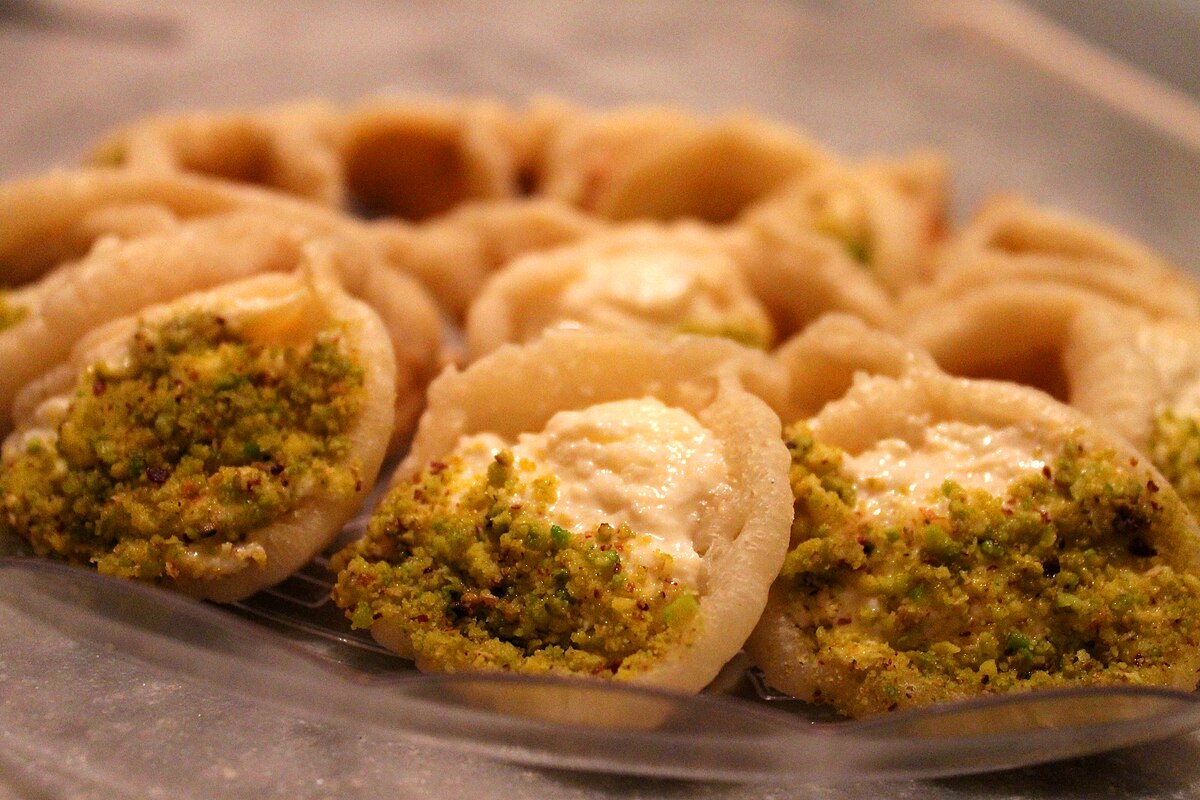
The fundamental process of making qatayef has remained remarkably consistent over centuries. It begins with a delicate batter, traditionally made from flour, semolina, yeast, sugar, salt, and water or milk. This batter is allowed to ferment, creating the characteristic bubbly pockets when cooked on one side of a hot griddle without flipping. This unique cooking method ensures a soft, tender interior with a slightly crisp edge, perfect for holding the generous fillings.
While the classic almond and sugar filling remains popular, the dessert has evolved to embrace diverse tastes. Traditional variations include unsalted cheese (like Nabulsi) for a savory-sweet contrast, or rich clotted cream (ashta) for a lighter, often unfried version known as qatayef asafiri. Modern interpretations have even welcomed fillings like Nutella, showcasing qatayef's adaptability while maintaining its beloved core identity. After filling and folding into its iconic half-moon shape, the pastries are typically fried or baked until golden, then immediately immersed in an aromatic sugar syrup, often infused with lemon juice, rosewater, or orange blossom water, to achieve their signature sweet, sticky glaze. To learn more about the diverse fillings and cultural importance, check out Qatayef Explained: Fillings, Varieties, and Cultural Significance.
Tips for Enjoying Modern Qatayef:
- Freshness is Key: Seek out freshly made qatayef from local bakeries during Ramadan for the best experience.
- Explore Fillings: Don't stick to just one! Try the nut-filled, cheese-filled, and cream-filled versions to appreciate the range.
- Homemade Charm: While intricate, making qatayef at home can be a rewarding experience, allowing you to control sweetness and filling.
- Pairing Perfection: Enjoy qatayef with a cup of strong Arabic coffee or mint tea to balance its sweetness.
Conclusion: A Timeless Legacy
The journey of qatayef, from the sophisticated kitchens of Abbasid caliphs to the bustling markets of modern-day Ramadan, is a testament to its enduring appeal and profound cultural significance. It is a dessert that has not only survived the ebb and flow of empires but has thrived, continually adapting while holding steadfast to its ancient roots. Each delicate bite of qatayef offers more than just sweetness; it's a taste of history, a connection to generations past, and a celebration of a culinary legacy that continues to enchant hearts across the Middle East and beyond. As families gather to break their fast, the presence of qatayef on the table is a comforting reminder of continuity, tradition, and the timeless joy found in shared culinary heritage.
